
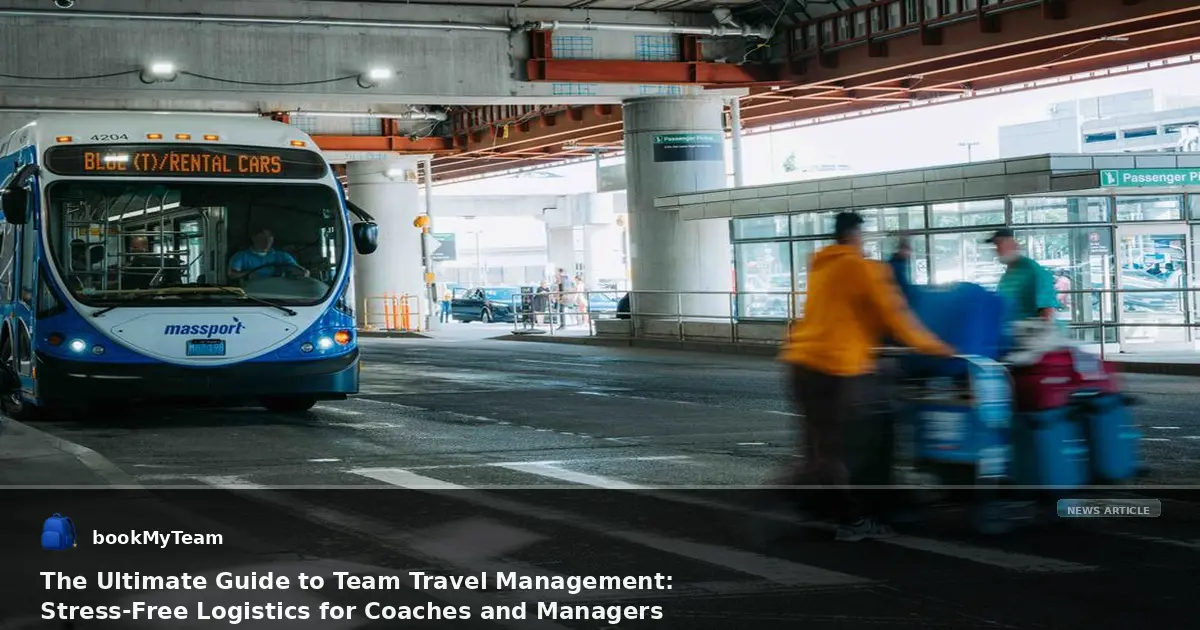
Every season, coaches and team managers face the same test: moving an entire roster — players, staff, and often parents — across multiple cities without the trip unraveling. The games are scheduled and the buses are booked, but the hotels, the room lists, and the deadlines are where the stress lives. Team travel management is the discipline of pulling all of that together — transport, lodging, and schedules across several stops — into one plan a single coordinator can actually run.
\n\nWhy Multi-City Travel Breaks Ordinary Booking
\n\nBooking one hotel for one night is easy. Booking hotels across several cities on a tournament, road-trip, or corporate schedule is a different job entirely. Every stop has its own check-in date, its own room count, and its own deadline for holding a rate. When a coordinator handles those stops one at a time, details slip: a cutoff date passes, a room block shrinks, a traveler’s name gets missed on the list.
\n\nThat is the strongest case for treating team travel management as a system rather than a to-do list. When the itinerary lives in one place, changes flow through every city automatically, and nothing depends on one person remembering to send one more email.
\n\nWhat Good Team Travel Management Actually Covers
\n\nA workable team travel management plan answers four questions before anyone boards a bus: where the team is staying in each city, how many rooms are held at each stop, who is on the room list, and what it will all cost. Spreadsheets can hold those answers, but they cannot keep them current. A dedicated platform keeps rooms, rates, and rosters in sync, so a dropped player or an added staff member updates every stop at once.
\n\nThe payoff is less about software and more about control. Coordinators stop chasing confirmations and start managing the trip — checking deadlines, comparing offers, and knowing at a glance that every leg is covered.
\n\nBuild the Itinerary First, Then Book
\n\nThe most reliable habit in team travel management is to fix the itinerary before touching a single reservation. Map every city, every check-in and check-out date, and the room count at each stop. Only then should the booking begin — because a hotel cannot quote an honest group rate for a trip it cannot see in full.
\n\nThis is why multi-city requests work better than room-by-room bookings. When a team submits the whole itinerary as one request, hotels respond to the real scope of the trip, and competing properties have a reason to sharpen their numbers. Use the hotel directory to see which hotels operate in the cities we cover before committing, so every stop is handled by a property that actually competes for group business.
\n\nNegotiate Team Hotel Rates Instead of Accepting Them
\n\nThe first number a hotel shows is rarely the best one. For a group moving through several cities, team hotel rates are negotiated, not taken. A clear request — cities, dates, room counts, and budget — gives each property a concrete offer to answer, and the size of a multi-city trip gives the coordinator real leverage.
\n\nThat negotiation is where the savings come from. Submitting a team hotel booking as one structured request lets hotels compete against each other rather than against a posted price, and the winning numbers routinely land below what individual bookings would have cost. A group rate calculator helps set realistic expectations before the offers even arrive.
\n\nThe Logistics Checklist for Coaches and Managers
\n\n- \n
- Lock the itinerary first. Cities, dates, and room counts come before any reservation, so every quote reflects the full trip. \n
- Submit one multi-city request. A single RFP submission form covering every stop beats a pile of separate bookings. \n
- Track cutoff dates. Know when each negotiated rate expires, and confirm before the deadline so no block quietly disappears. \n
- Keep the roster current. A room list that updates as players and staff change prevents check-in surprises at every stop. \n
- Compare before you commit. Browse the hotel directory to see which properties compete in each destination. \n
From Spreadsheet to System
\n\nThe goal of team travel management is not more paperwork — it is less. It is the difference between a coordinator who spends the season putting out fires and one who shows up at each city with rooms confirmed, rates locked, and rosters current. That happens when the itinerary, the room lists, and the rates all live in one place, and when a team’s multi-city needs are handled as a single request rather than a stack of individual bookings.
\n\nCoaches and managers who make the switch stop reacting to travel chaos and start preventing it. The tools are already there: a centralized request flow, competing hotel offers, and a clear view of every leg of the journey. The teams that use them arrive in every city ready to focus on the game, the meeting, or the event that brought everyone there in the first place.